
Last updated November 23, 2026
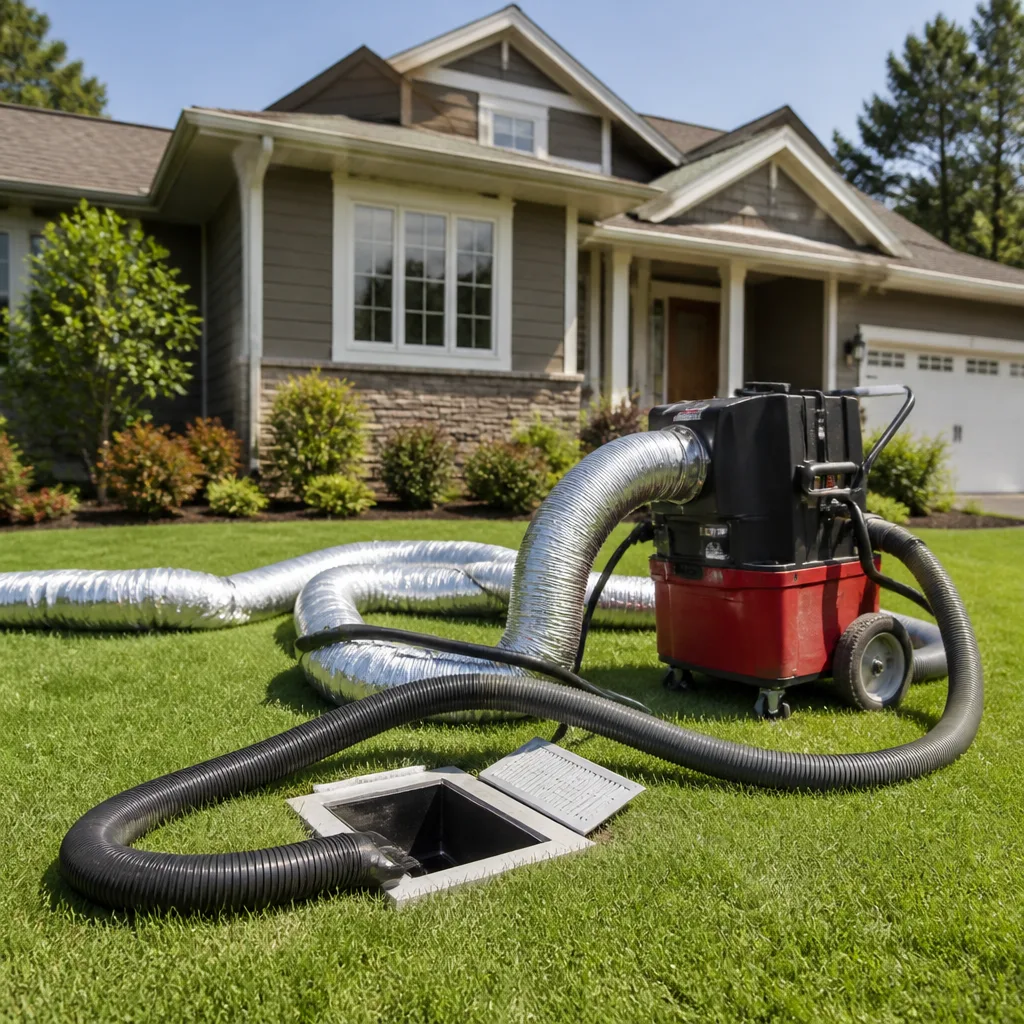 Whole-home duct cleaning
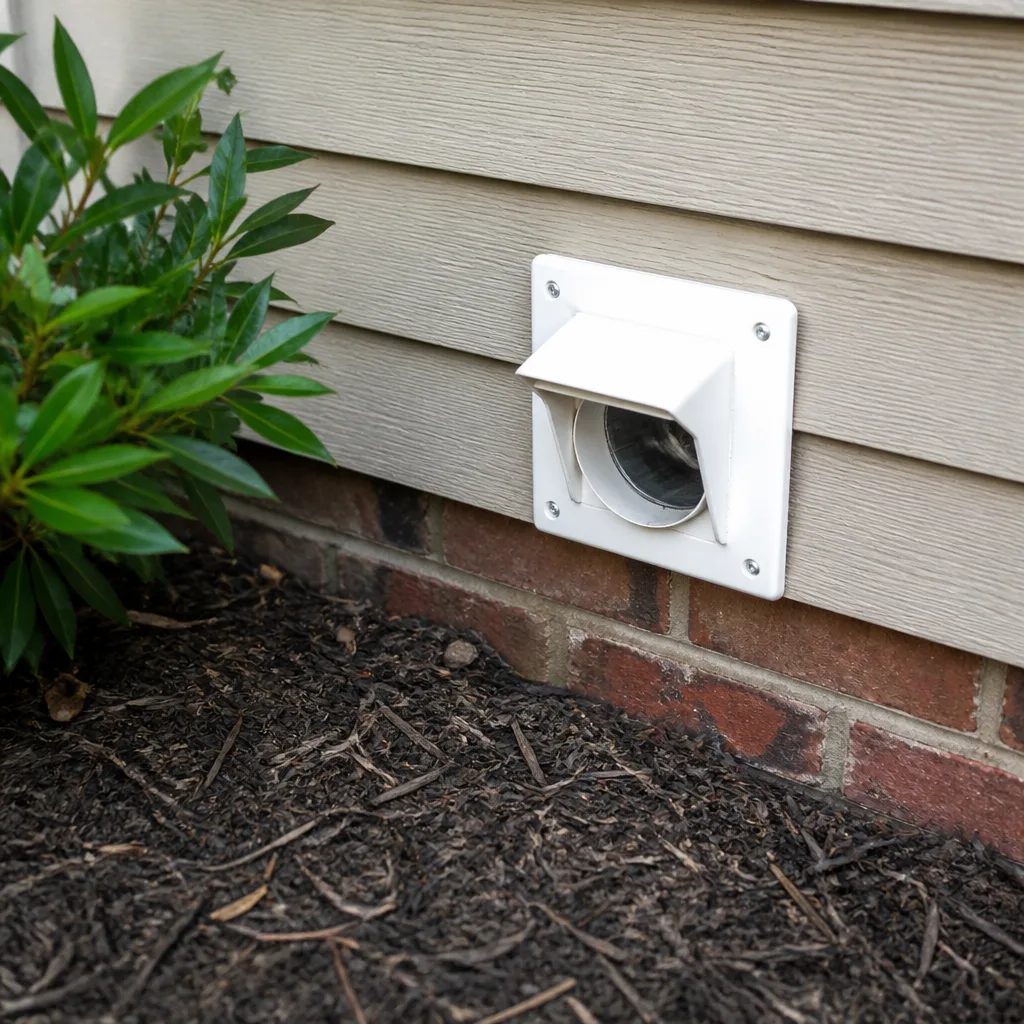 Dryer vent cleaning
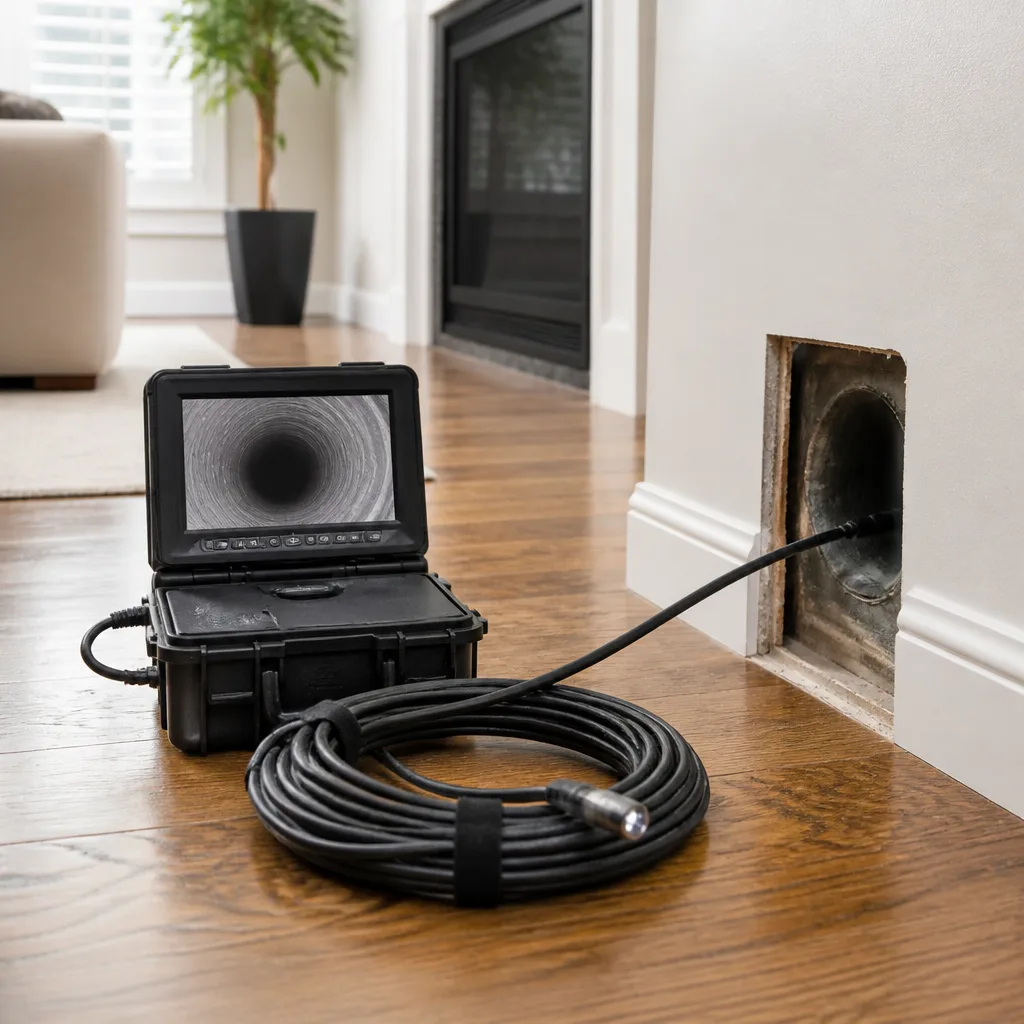 Camera inspection
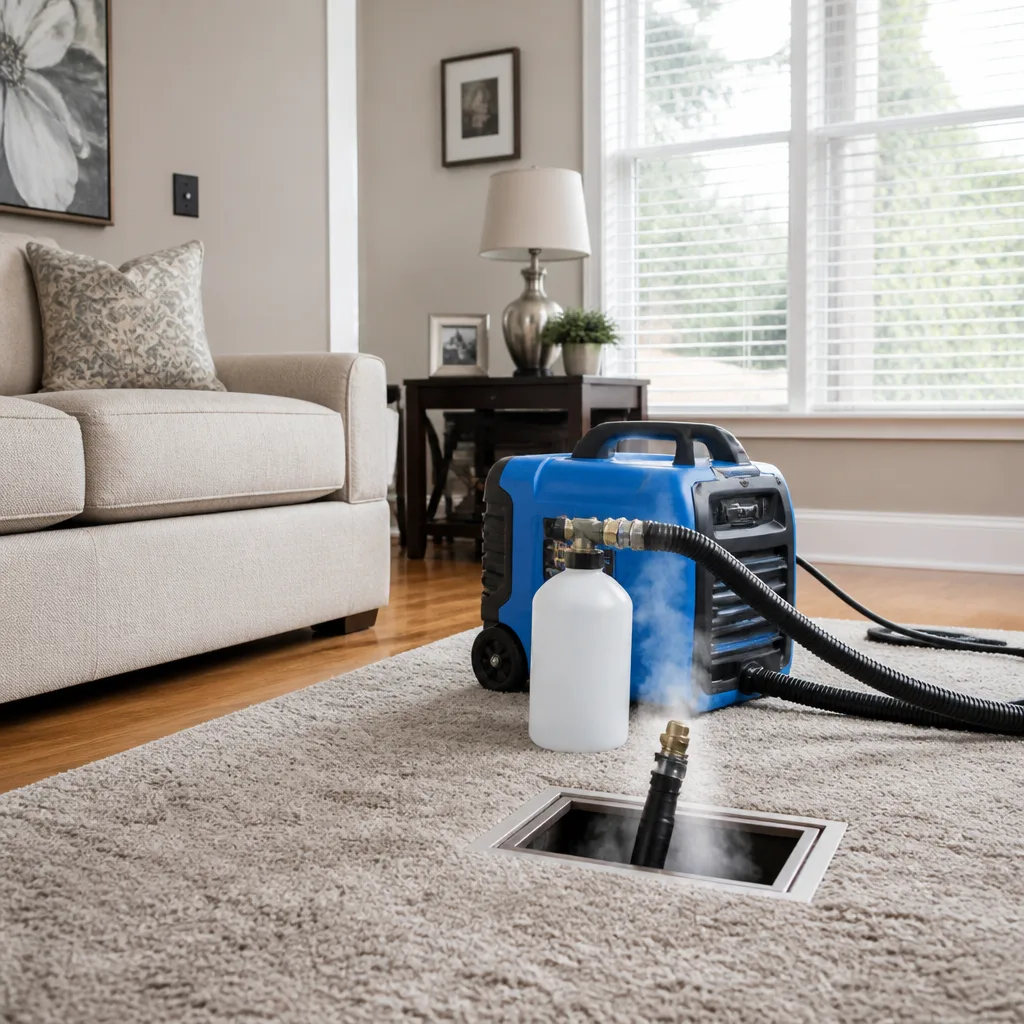 Sanitizing & deodorizing
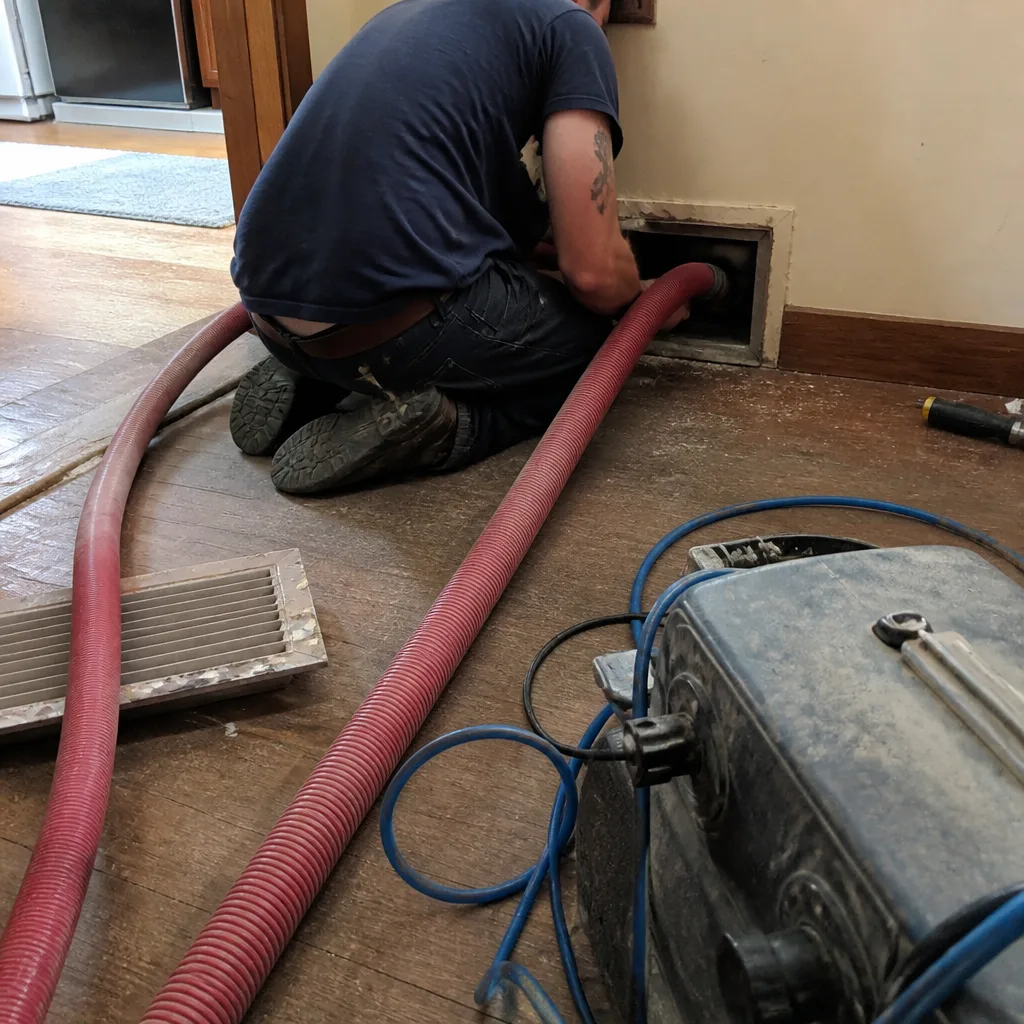
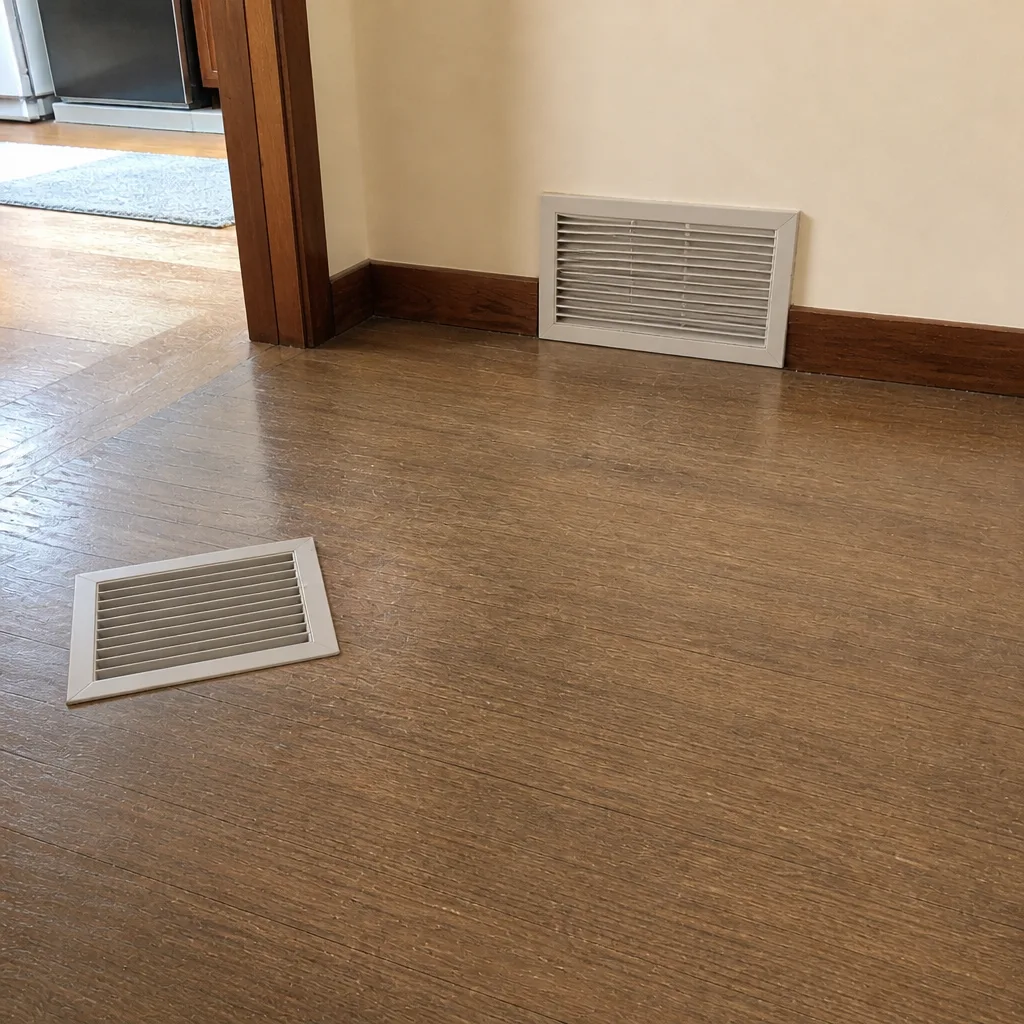
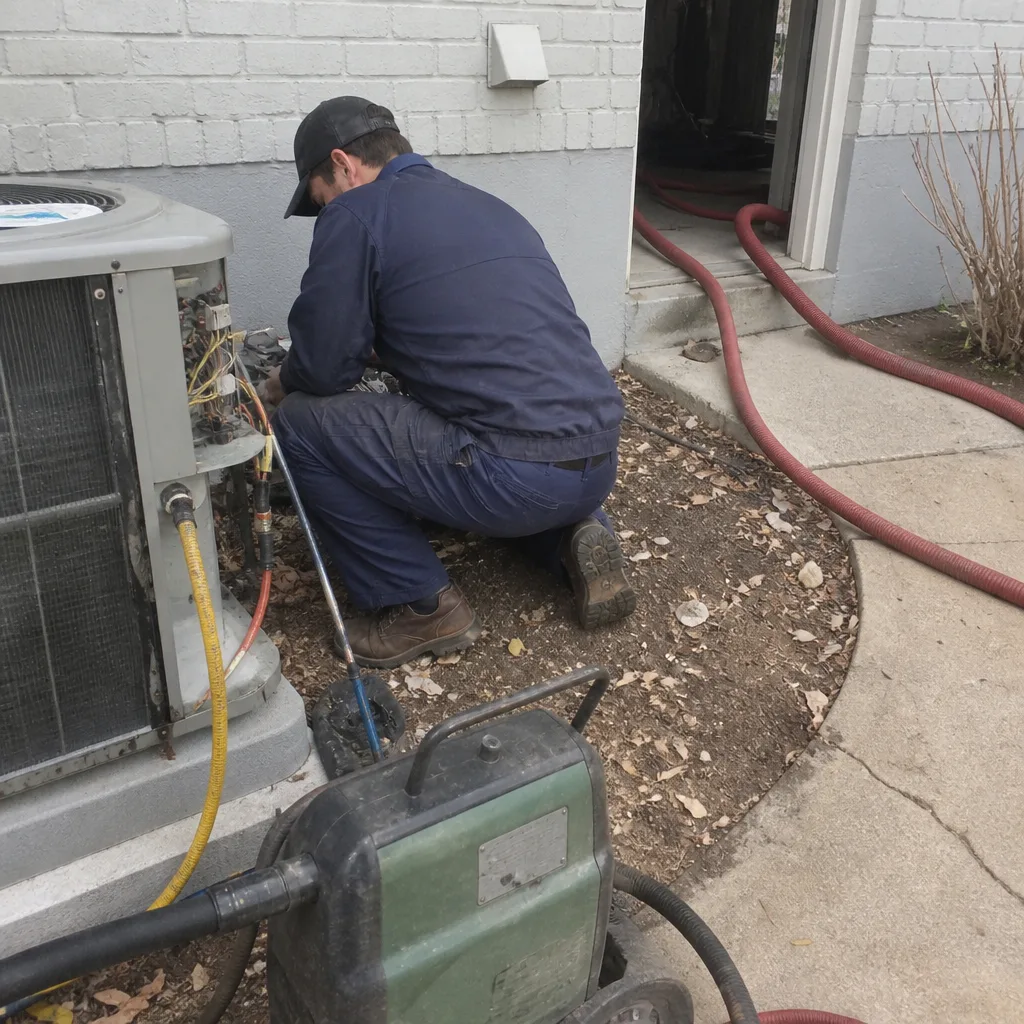
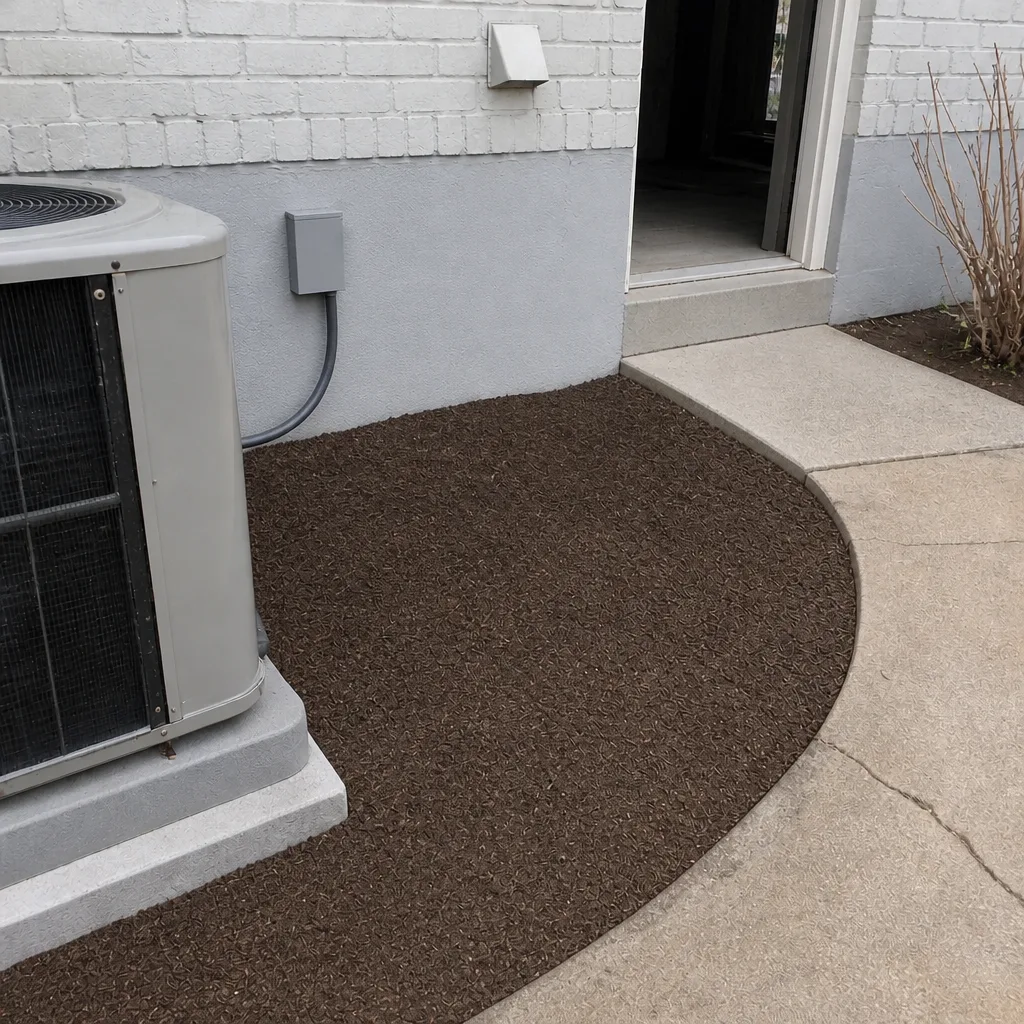
Whole-system duct and dryer vent check with before-and-after photos - you see exactly what came out of your vents
That "$99 whole-house special" is a bait ad - the real number appears once they are in your hallway, or the "clean" is a shop-vac at the register. We photograph the inside of your ducts before and after instead.
The Complete Guide to Air Duct Cleaning in Cherry Creek
Most air duct guides are written for a hypothetical house in a hypothetical climate. That advice lands at maybe 60% applicability in Cherry Creek, and the missing 40% is usually the part that matters. Our housing stock skews toward 1980s through 2000s construction running forced-air systems, our winters are dry enough to crack wood, and our summers send cottonwood fluff through every return grille in the neighborhood. Contamination patterns here don’t look like the patterns those national guides describe. This guide treats the local environment as the primary variable, walks through what credible cleaning actually involves, and shows you how to verify the work was done before you pay for it.
Quick Answer
Air duct cleaning in Cherry Creek is a mechanical process: rotary agitation of the duct walls combined with negative-pressure extraction, followed by visual verification, and typically run every two to five years depending on your system and household. In this climate, a semi-arid high-desert setting with heavy seasonal particulate, most homes benefit from a cleaning at the four-year mark rather than stretching to the generic advice. Equipment matters more than price, and the written verification report matters more than the sales pitch.
Styles & brands we work with
- Whole-home duct cleaning
- Dryer vent cleaning
- Camera inspection
- Sanitizing & deodorizing
Table of Contents
- How Cherry Creek’s Climate Accelerates Duct Contamination
- Builder-Grade Flex Duct vs. Rigid Sheet Metal: Why Your Duct Type Changes the Cleaning Method
- The Equipment Threshold: What Separates Real Cleaning From Cosmetic Blow-Through
- What a Proper Duct Cleaning Actually Involves, Step by Step
- How to Read a Post-Cleaning Verification Report
- Scheduling Triggers: Cottonwood, Wildfire Smoke, and Dry Winters
- What You Can Check Yourself (and What You Shouldn’t Touch)
- What Air Duct Cleaning Costs in Cherry Creek
How Cherry Creek’s Climate Accelerates Duct Contamination
Cherry Creek sits in a semi-arid zone with roughly 300 days of sun a year and very low average humidity. That combination does two things to ductwork that humid-climate guides never address. First, fine particulate stays fine. In humid homes, dust particles clump together as they pick up moisture and settle out of the airstream relatively quickly. Here, they stay airborne longer and travel deeper into the trunk lines and branch runs before landing. Second, the low humidity means the dust that does settle becomes electrostatic and clings to duct walls instead of sliding down into the plenum where a shop vac can reach it.
The practical consequence is that a Cherry Creek home can look clean at the return grille filter and still have a substantial accumulation coating the inside of the trunk. We see this pattern repeatedly on systems that have run for years with regular filter changes but no mechanical cleaning. The filter catches the big stuff; the fine fraction sails past it and builds up downstream.
Winter makes it worse in a different way. Heating season here runs long, and a forced-air furnace moving warm, dry air through the same ductwork for five or six months compresses dust onto the hot-side surfaces of the supply runs. When cooling season starts and the system switches to a colder airstream, that baked-on layer releases more readily. Homeowners in Cherry Creek often notice the musty smell or dust spike the first week they turn the air conditioning on, not during the heating season.
If you’re already noticing reduced airflow at the registers nearest the furnace and an increase in dust settling on horizontal surfaces, that’s a reasonable point to have the system inspected. You can read more about the mechanical approach on our air duct cleaning page.
Builder-Grade Flex Duct vs. Rigid Sheet Metal: Why Your Duct Type Changes the Cleaning Method
A significant share of Cherry Creek’s housing was built through the 1990s and early 2000s, and much of that construction used builder-grade flexible duct on the branch runs feeding individual rooms. Flex duct is a plastic inner liner wrapped in insulation and an outer vapor barrier. It performs fine as an air carrier, but it degrades differently than rigid sheet metal under contamination load.
Three differences matter for cleaning:
- The liner is textured. The corrugations that allow flex duct to bend also create troughs where dust accumulates and sticks. Mechanical agitation has to be gentle enough not to tear the liner but thorough enough to sweep every corrugation. That’s a real equipment and technique constraint, not a marketing point.
- The liner ages. Over years of dry heat cycling, the inner liner can become brittle. A rotary brush run at the wrong speed through aged flex duct will scuff or shred it. Any credible cleaner assesses the condition of the liner before inserting a brush head, and stops if the duct won’t survive the cleaning.
- Flex duct sags. Improperly supported flex runs dip between hangers, and those low points collect both dust and condensation. Compressed or sagging sections can’t be cleaned effectively until they’re re-supported or replaced.
Rigid sheet metal, more common in older Cherry Creek homes and in the trunk lines of nearly every system, takes a more aggressive brush without complaint. But it develops its own issues: seam leaks, tape failure at joints, and rust at the cold-side sections. Cleaning a sheet-metal system without addressing failed seams just re-contaminates the space around the duct after the vacuum shuts off.
That’s why we sequence HVAC cleaning with duct repair and sealing when the inspection calls for it. Sealing a leaky joint after cleaning is the difference between a clean system and a clean system that stays clean. The building science is straightforward: a supply duct leaking into an attic or crawlspace pulls unconditioned air back into the return, and all the cleaning in the world doesn’t fix that.
The Equipment Threshold: What Separates Real Cleaning From Cosmetic Blow-Through
The single biggest variable in duct cleaning quality isn’t price or brand name. It’s whether the cleaner brings the right equipment to your house. Two components define a credible job:
- Negative pressure from a truck-mounted or high-CFM vacuum unit. The vacuum creates a continuous pull on the entire duct system, so every dislodged particle flows toward the extraction point rather than into your living room. A shop vac or a portable unit with a small blower is not a substitute. It can’t maintain negative pressure across a whole-house system, and it typically pushes as much air as it pulls.
- Mechanical agitation at the duct wall. Vacuum alone doesn’t remove adhered dust. A rotating brush or air whip has to physically contact the interior surface to break the dust loose while the negative pressure carries it away. This is what we mean by “purpose-built equipment, not improvised tools” – the Rotobrush and Nikro systems are designed together: brush heads sized for the duct, vacuum rated for the brush.
A cosmetic “blow-through” happens when a cleaner skips the agitation step, opens a few registers, and runs a blower to push loose dust out. It looks like progress because dust clouds blow out of the supply vents. What actually happens is that the adhered layer stays adhered, and the loosened fraction you just paid to dislodge ends up in your furniture, your HVAC coil, and your lungs. There is no verification method that can confirm a blow-through, which is the tell.
During cleaning, we also use Abatement Technologies air filtration equipment to capture dislodged particulate that would otherwise escape into the living space. This is a contamination-containment step, not a substitute for negative pressure. It reduces cross-contamination inside the home during service, which matters especially in occupied houses and on systems where the return duct runs through conditioned space.
What a Proper Duct Cleaning Actually Involves, Step by Step
Here’s what a real cleaning sequence looks like on a typical Cherry Creek ranch or two-story home. If a company you’re considering can’t describe each of these steps when you ask, that’s information.
- Walk-through and system assessment. Every register and return gets identified and counted. The duct material, condition, and layout get recorded. Flex liner condition is checked before any brush goes in.
- Containment setup. The vacuum is connected to the main trunk, usually at the furnace plenum. Registers are opened one at a time and the others sealed so pressure stays concentrated. Air scrubbing equipment is placed for particulate containment.
- Agitation of every branch run. A rotary brush or air whip is fed down each branch from the register opening toward the trunk. This is the labor-intensive part, and it’s where the actual cleaning happens. A 12-register home typically takes longer than a 6-register home for exactly this reason.
- Trunk line agitation. Larger-diameter trunk lines take a larger brush head or a coordinated multi-brush technique. This is where a system with a decade of accumulation gives up the bulk of its debris.
- HVAC component cleaning. The blower wheel, evaporator coil face, and furnace cabinet get cleaned of the material that passed through the ducts over the years. Cleaning ducts without cleaning the air handler is unfinished work.
- Sealing, if needed. Failed seams, unsealed takeoffs, and torn flex connections get sealed while the system is accessible.
- Visual verification and documentation. Before-and-after photos of representative duct interiors, plus a written summary of what was cleaned and what was found.
The sequence matters. Agitation before extraction. Containment throughout. Verification at the end. When those three are present, the work is verifiable. When one is missing, you’re relying on the technician’s word.
How to Read a Post-Cleaning Verification Report
A credible post-cleaning report is short, specific, and visual. The best ones include before-and-after photographs of the same duct sections, taken through the register openings with a flash or work light visible so the interior is illuminated. What you should be able to confirm from the report:
- Before and after photos of the same location. Not “before” from one branch and “after” from another. The camera should shoot the identical position before agitation and after extraction so you can see the same corrugations, the same seam, the same surface.
- Register-by-register confirmation. A list of every register and return cleaned, with a note on any that were inaccessible or needed repair.
- System findings. Anything found during cleaning that wasn’t visible before: failed seams, damaged flex, mold growth on a coil, a disconnected branch, or evidence of pest intrusion.
- Static pressure readings, if offered. A before-and-after static pressure measurement on the supply and return sides tells you whether the system is actually breathing better after cleaning. Not every job warrants it, but on older systems with a long accumulation history, a pressure reading on both sides of the air handler is the single best objective measurement of improvement.
What you should not accept as verification: a verbal “all done,” a receipt with the word “cleaned” on it, or photos of the register grate. None of those confirm anything about the duct interior. If a company can’t produce photos of the interior of your ducts, they likely didn’t document the work.
This is one of the reasons we keep the process photographable. Purpose-built equipment plus documented verification means the work isn’t a claim, it’s a record.
Scheduling Triggers: Cottonwood, Wildfire Smoke, and Dry Winters
“Every three to five years” is the generic rule. In Cherry Creek it’s the floor, not the ceiling. The local calendar produces two annual particulate events that national scheduling advice ignores:
Cottonwood season. The cottonwood fluff that coats every screen door and window well in late spring also works its way into return air grilles and, once it compacts, into the lower return duct. That fluff acts as a filter mat: it traps finer dust, matts down against the duct wall, and reduces return airflow once the heating season starts. Homes near mature cottonwoods benefit from a return-side inspection in early summer, not in the fall before heating season.
Wildfire smoke season. Cherry Creek’s summer air quality is periodically affected by regional wildfire smoke. When smoke is heavy, homeowners correctly close windows and run the HVAC system as a filtration loop, which drives a much larger volume of fine particulate through the return and into the filter and downstream duct. If you ran your system hard through a dense smoke event, the return-side ductwork picks up a load faster than in a normal season. A filter change alone doesn’t reach the duct surfaces.
Dry heating season. The long furnace season here moves a lot of warm, dry air. If you’ve also added a whole-house humidifier, the added humidity changes the dust behavior in the system: it can turn loose particulate into a film that adheres to the duct wall and, in the worst case, feeds microbial growth. If you’ve noticed a musty smell after a humidifier install, that’s the mechanism.
If your household combines any two of these triggers – cottonwood-heavy lot, a hard-run smoke season, or a whole-house humidifier – a four-year cleaning interval is more realistic than five. And if you’ve had a renovation or recently bought a home in Cherry Creek without documentation of prior cleaning, an inspection is worth scheduling on principle.
What You Can Check Yourself (and What You Shouldn’t Touch)
Not everything requires a call. There’s real value in checking a few things yourself before you decide whether the system needs professional attention.
What you can check:
- Register grates and diffusers. Remove and look. If the grates are visibly matted with dust and hair, you can clean them.
- Filter condition and fit. A filter that doesn’t seal the filter rack edge is letting air bypass. Check the slot dimensions and confirm the filter actually fits.
- Return air grilles. A return grille packed with cottonwood fluff is restricting airflow. You can vacuum the visible face.
- Visible dust at the supply outlets. A light dust trail at the register is common; a visible stream means the ductwork is carrying debris it shouldn’t.
- Odor. If a musty or burnt smell appears only when the HVAC runs, something in the system is generating that smell. That’s an inspection cue.
What you shouldn’t touch: the air handler cabinet, the blower wheel, the evaporator coil, gas furnace components, or the duct interior beyond the visible register opening. Reaching into a duct to brush a section you can see doesn’t clean anything beyond that section, and it risks dislodging debris into the air handler. More importantly, an air handler contains high-voltage electrical components and, on gas systems, the burner assembly. Those are not homeowner-access areas. If you suspect a problem inside the unit, call a professional; opening the cabinet to investigate can be genuinely dangerous.
For the dryer vent, the calculus is different. A clogged dryer vent is a fire risk, and it’s an accessible fire risk that doesn’t get cleaned because nobody thinks to. dryer vent cleaning is a routine service that belongs on the same list as filter changes. We list it separately on the service menu because it’s frequently the highest-risk item in the house that gets skipped.
What Air Duct Cleaning Costs in Cherry Creek
Cost in Cherry Creek depends on system size, duct material, accessibility, and whether repair and sealing are included. Typical whole-house ranges fall in the following bands. These are estimates, not quotes; the written estimate is what sets the final price.
- Standard ranch home, 6 to 10 registers, clean system: lower end of the range.
- Two-story home, 12 to 18 registers, with a decade or more of accumulation: middle of the range.
- Larger home or system with flex duct requiring extra care, plus air handler cleaning: upper end of the range.
- Duct sealing or repair, where inspection reveals failed seams or torn flex: priced separately after the inspection determines scope.
- Dryer vent cleaning: typically a modest standalone service and a reasonable add-on to a duct cleaning.
The “how much does air duct cleaning actually cost” question is best answered by a written estimate after a walk-through, not by a phone quote. A phone quote is based on a register count, not on the condition of the ducts. Two 12-register homes in Cherry Creek can need very different amounts of work.
Common Mistakes to Avoid
- Hiring on price alone without asking about equipment. A quote that’s dramatically lower than the rest usually reflects a shop vac and a blower rather than a truck-mounted vacuum and rotary agitation. Ask specifically what vacuum and what brush system will be used.
- Accepting a per-vent price. A per-vent quote invites the next question: how many vents will you find when you get there? You pay per vent, not per system. Whole-system pricing set in the written estimate is the cleaner arrangement.
- Skipping the air handler. Ducts that are clean upstream of a contaminated blower and coil aren’t actually clean. The air handler is part of the system.
- Cleaning without sealing. In a Cherry Creek home with any attic or crawlspace duct runs, cleaning a system with unsealed joints means you’ve cleaned a system that leaks. Sealing after cleaning is often the step that makes the biggest difference to your energy bill and indoor dust levels.
- Running a new filter but never inspecting the return. A return-side mat of cottonwood fluff and dust can’t be cured by a filter. The return grille and the duct behind it are upstream of the filter.
- Waiting for a musty smell as the trigger. Odor is a late signal. By the time you smell something, the accumulation has been feeding microbial growth for a while. Visual inspection and pressure readings are earlier signals.
- Choosing a cleaner who won’t show the interior in photos. Verification isn’t optional. If the work can’t be documented, it can’t be confirmed.
See the difference
 Before
 After
 Before
 After
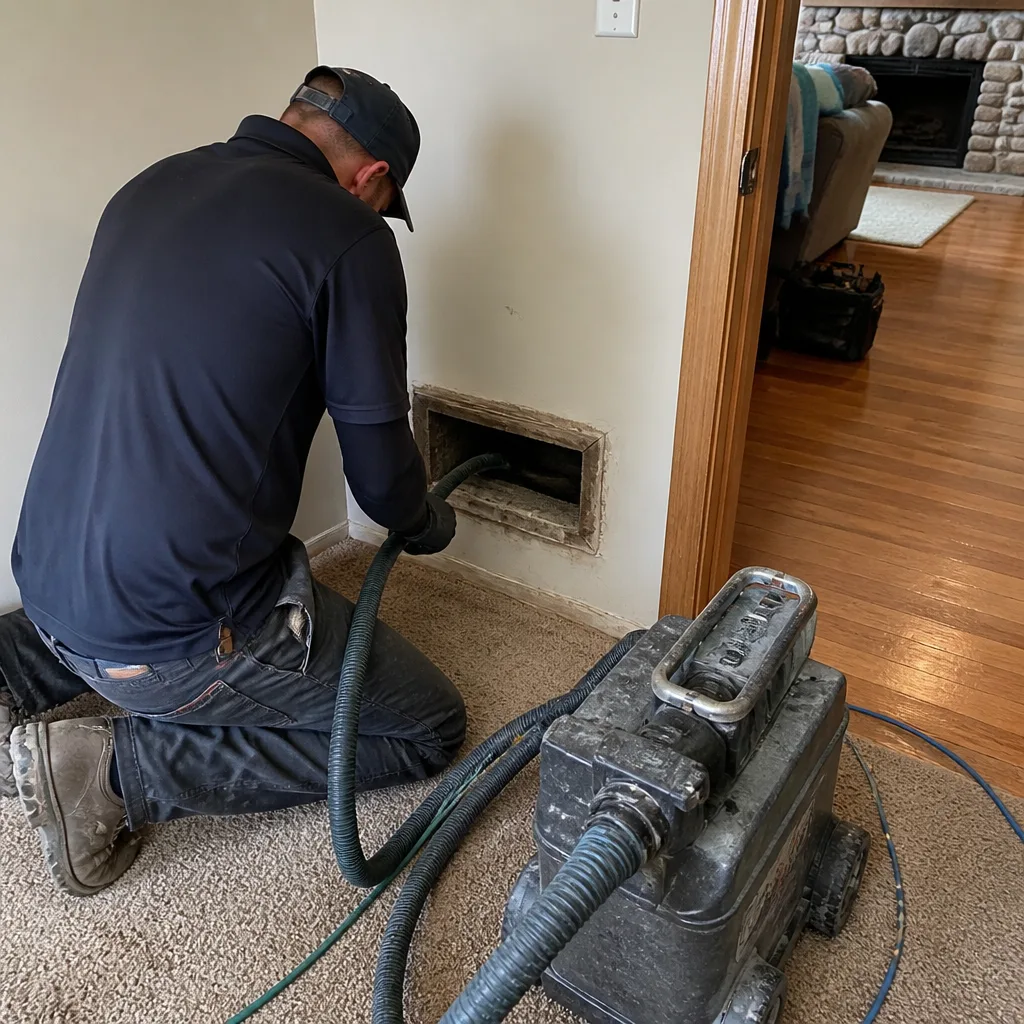 Before
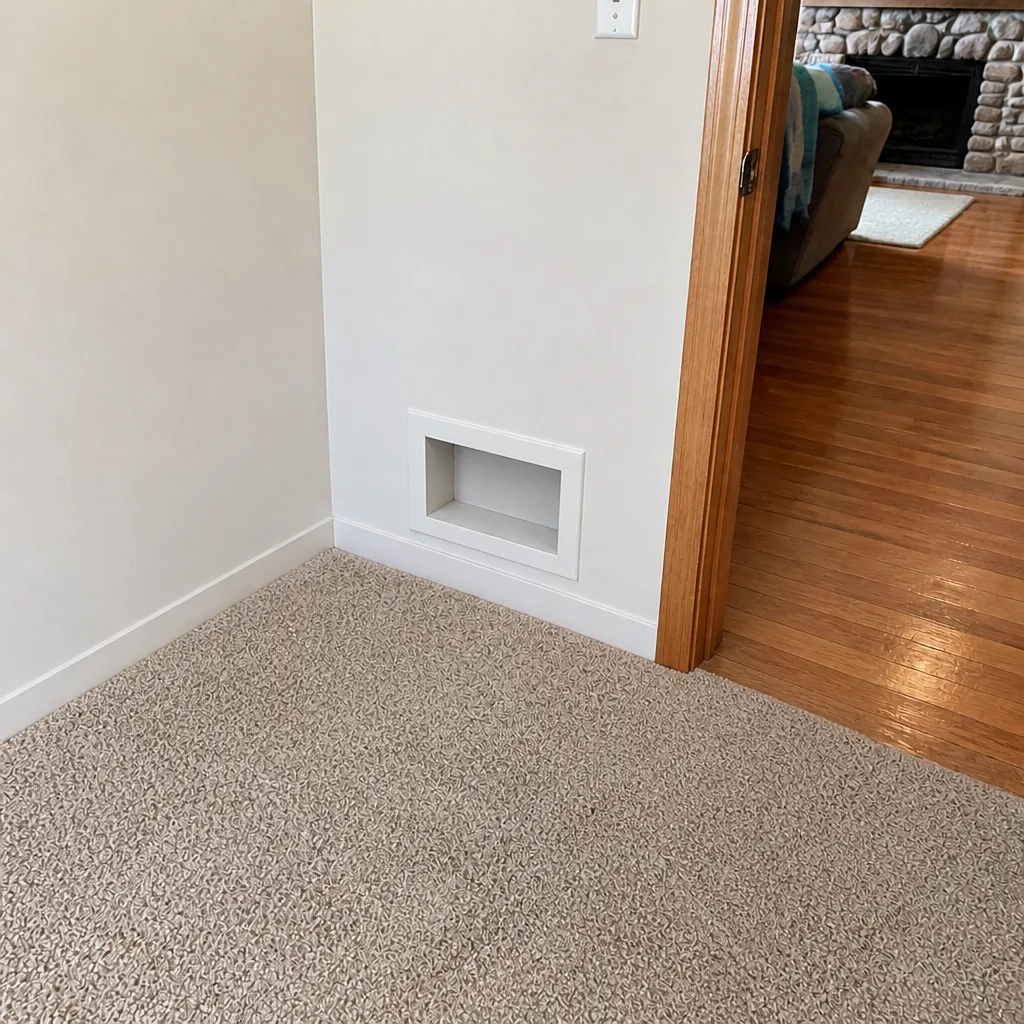 After
When to Call a Professional
You’re a reasonable candidate for a professional inspection if any of these apply: the system has never been cleaned and you’ve lived there more than three years, you’ve had a renovation that generated drywall dust, you’re noticing increased allergy symptoms at home, your furnace or AC is short-cycling from restricted airflow, or you’re about to bring a new baby home and want the indoor air sorted first. A dryer vent that takes two cycles to dry a load, or that’s been in place longer than you can remember, is its own call-to-action.
Air Duct Cleaning Cherry Creek offers free estimates in Cherry Creek; the price is set per system in the written estimate, and before-and-after photos document the work. Call (844) 443-3752. We answer 24/7. Fast dispatch from 7am to 7pm, Sunday through Friday.
Frequently Asked Questions
Whole-house duct cleaning in Cherry Creek typically falls into a range based on register count, system size, and whether air handler cleaning and duct repair are included, with the exact figure set by the written estimate after a walk-through. Phone quotes are a starting point, not a final price, because two systems with the same register count can need very different amounts of work. Call (844) 443-3752 for an exact quote; estimates are free.
Many low quotes assume a shop vac and a blower rather than a truck-mounted vacuum and rotary agitation, which means the work is a cosmetic blow-through rather than mechanical cleaning. The equipment cost is the difference. A quote that’s dramatically lower is usually quoting a different service than the one you want. Call (844) 443-3752 and ask what equipment we bring; the answer is part of the estimate.
Before-and-after photographs of the same duct interior, taken through the register opening, are the proof. A credible report lists every register cleaned and documents anything found during the work. We photograph each section before and after agitation so you can see the change on your own system. Call (844) 443-3752 to schedule and we’ll walk you through what the report will contain.
Every four years is a reasonable default for most Cherry Creek homes with cottonwood exposure or a heavy wildfire smoke season on record, and every three to five years for homes with fewer local triggers. The generic advice of three to five years assumes a moderate climate without a heavy seasonal particulate load, which doesn’t match this area. The written estimate for your system is the best way to know what your specific interval should be.
If the source of the symptoms is accumulated dust, pollen, cottonwood particulate, or pet dander in the ductwork, cleaning removes that source, and many homeowners notice a difference in household dust and air quality. Cleaning doesn’t address allergies whose source isn’t in the air system. An inspection can tell you whether the ducts are a meaningful contributor. Call (844) 443-3752 for a free inspection and quote.
Yes. The blower wheel, evaporator coil, and furnace cabinet hold the material that passed through the ducts over years of operation, and cleaning the ducts without cleaning the air handler leaves a contamination source in the middle of the system. We handle Air Duct Cleaning Cherry Creek and air handler cleaning together in one visit. Call (844) 443-3752 with questions; estimates are free.
The Bottom Line
Cherry Creek’s climate and housing stock make it a harder environment for ductwork than the generic guides suggest. Semi-arid air keeps fine dust airborne longer, cottonwood season loads the return side every spring, wildfire smoke episodes push a heavier load through the system, and builder-grade flex duct on many 1990s homes needs careful handling rather than aggressive brushing. Credible cleaning in this market means truck-mounted negative pressure, mechanical agitation with purpose-built equipment, containment throughout, and photographic verification of the interior before and after. Price matters, but it’s a secondary variable. The written estimate, the before-and-after photos, and a report you can read are the real assurance. Our technicians have up to 9 years of experience, and we can work with your insurer where coverage applies.
Call (844) 443-3752 for a free estimate in Cherry Creek. We answer 24/7. Fast dispatch from 7am to 7pm, Sunday through Friday.
Written by the team at Air Duct Cleaning Cherry Creek.